The Navaratna: The Nine Sacred Gemstones of Vedic Astrology
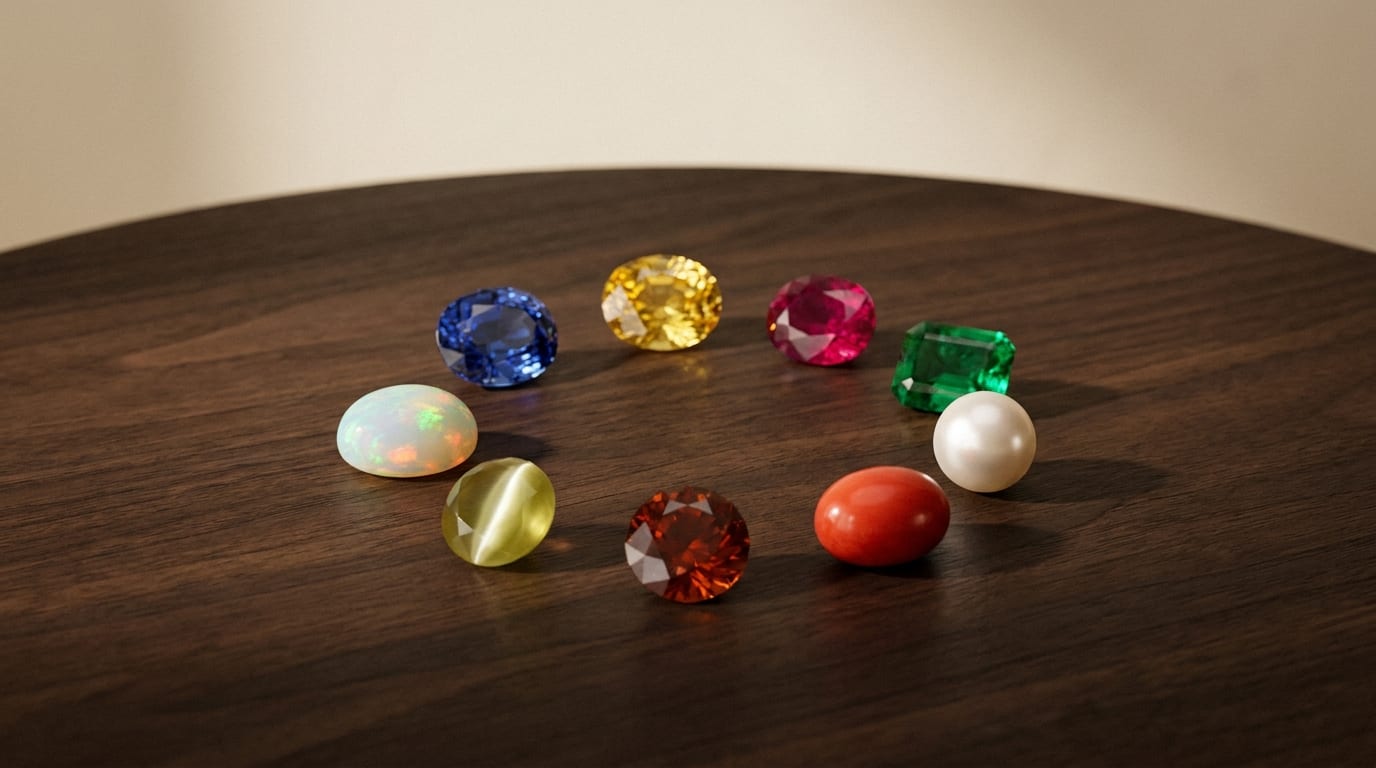
Navaratna literally means "nine gems" in Sanskrit — a set of nine gemstones, each corresponding to one of the nine grahas (celestial bodies) tracked in Vedic astrology: the Sun, Moon, Mars, Mercury, Jupiter, Venus, Saturn, and the two lunar nodes, Rahu and Ketu.
The nine stones and their planets
- Ruby (Manik) — Sun. Associated with confidence, vitality and leadership.
- Pearl (Moti) — Moon. Associated with emotional calm, intuition and peace of mind.
- Red Coral (Moonga) — Mars. Associated with courage, vitality and ambition.
- Emerald (Panna) — Mercury. Associated with intellect, communication and business acumen.
- Yellow Sapphire (Pukhraj) — Jupiter. Associated with wisdom, fortune and marital harmony.
- Diamond (Heera) — Venus. Associated with love, luxury and harmony (opal is commonly worn as an accessible substitute).
- Blue Sapphire (Neelam) — Saturn. Associated with discipline, career growth and protection — also considered the most powerful and fastest-acting of the nine, for better or worse.
- Hessonite (Gomed) — Rahu. Associated with ambition, focus and worldly success.
- Cat's Eye (Lehsunia) — Ketu. Associated with spiritual insight, intuition and protection from hidden obstacles.
You don't wear all nine at once
A common misconception is that Navaratna jewellery — a single piece set with all nine stones — is meant to be worn by everyone at all times. In practice, astrologers rarely recommend wearing all nine together for remedial purposes; combining stones ruled by planets that don't get along in your chart (planetary "enemies") can work against you. Navaratna pieces are more often worn as ornamental or ceremonial jewellery representing completeness, while a targeted recommendation — your specific life, lucky and benefic stones — is what's typically prescribed for astrological benefit.
If you're curious which of the nine actually apply to your chart, our gemstone recommendation tool works it out from your birth details.