Natural vs. Treated Gemstones: What Every Buyer Should Know
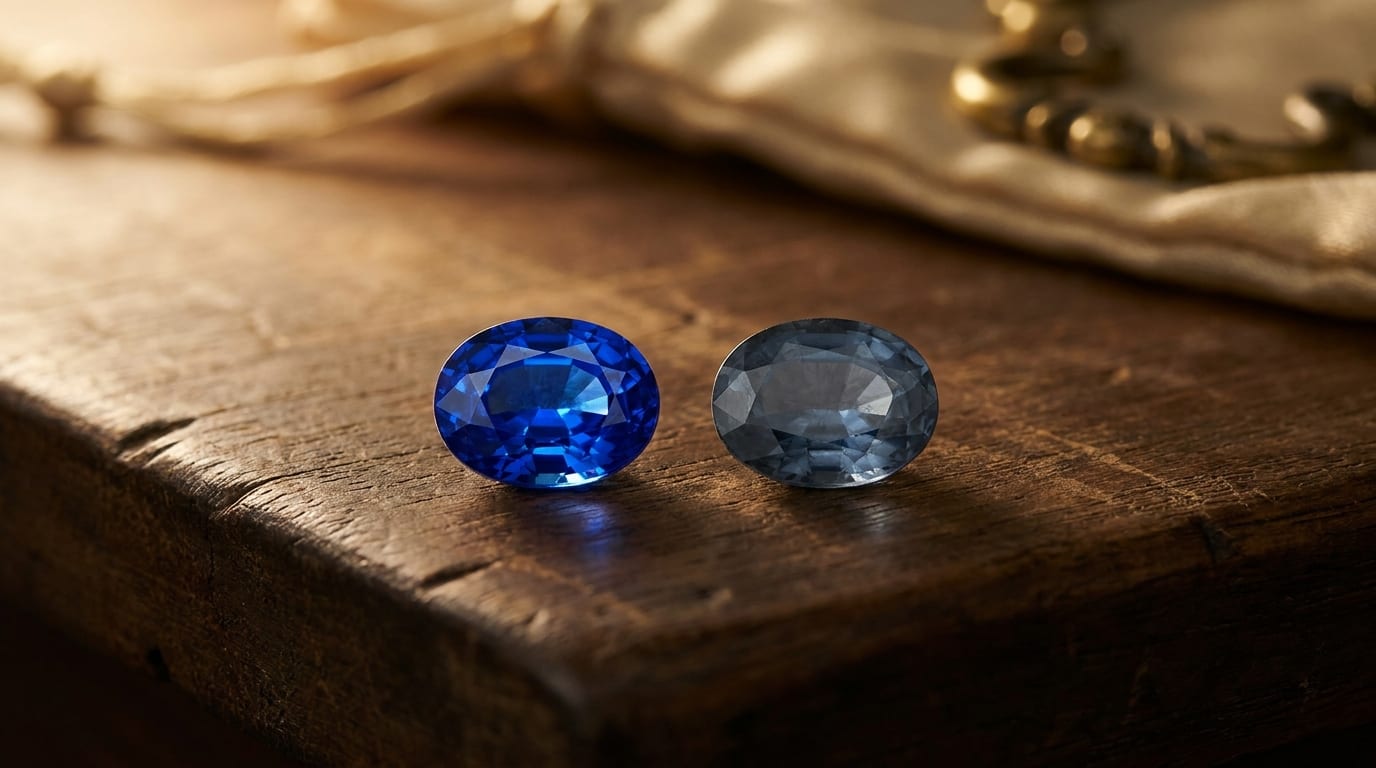
Treatment is common across the gem trade — by some estimates, the large majority of coloured gemstones sold worldwide have been treated in some way to improve colour or clarity. Treatment isn't inherently dishonest; the problem is when it isn't disclosed.
Common treatments
- Heat treatment — the most common, used on sapphires, rubies and more to improve colour and clarity. Widely accepted in the trade when disclosed, and has been standard practice for centuries.
- Oiling — common in emeralds, where natural fissures are filled with oil (or resin, in more invasive cases) to improve apparent clarity.
- Irradiation and dyeing — used on some stones to alter or deepen colour; generally considered a more significant departure from the natural stone.
- Diffusion treatment — colour is introduced only at the surface of a stone through high-temperature chemical diffusion, sometimes only micrometres deep.
Natural and unheated: the premium tier
A stone described as "natural, unheated" (or "no heat," "untreated") has not undergone any of the above — its colour and clarity are exactly as they formed in the earth. These stones are rarer, priced at a significant premium over treated equivalents, and — for astrological purposes — considered by many practitioners to carry the gem's full traditional significance in a way a treated stone may not.
What to check before buying
- Does the listing or seller explicitly state the treatment status, not just the gem type?
- Does the certificate (from GIA, IGI or an accredited government lab) confirm "unheated" / "no indications of treatment" in writing?
- Is the price consistent with the claimed treatment status? A large, clean, "natural unheated" ruby priced like a heated one is a red flag.
Every stone in our catalog is natural, unheated and untreated, verified by independent lab certification and disclosed clearly on every product page — no exceptions.